1. Home
  2. Products
  3. OneCloudify
Built on the ServiceNow platform

Hybrid cloud provisioning and governance on ServiceNow

Order from every major cloud, AWS, Azure, Google Cloud and Oracle Cloud, with your approvals and change process built in. See the cost before you order, then compare actual spend with what was ordered. Standard ServiceNow Discovery finds every resource, so your CMDB stays up to date.

OneCloudify OneCloudify

Every major cloud at the same level, plus VMware vSphere for private cloud. Easy to extend: new clouds, resource types and day-2 automation plug in without changing the core.

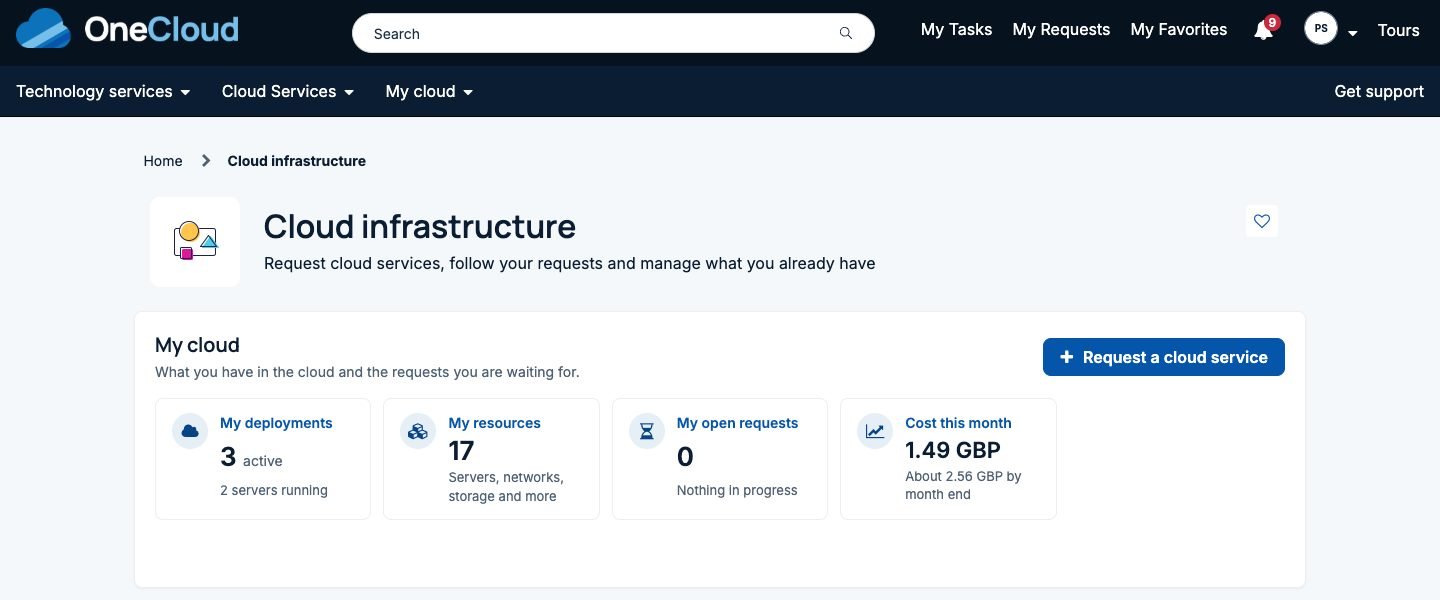
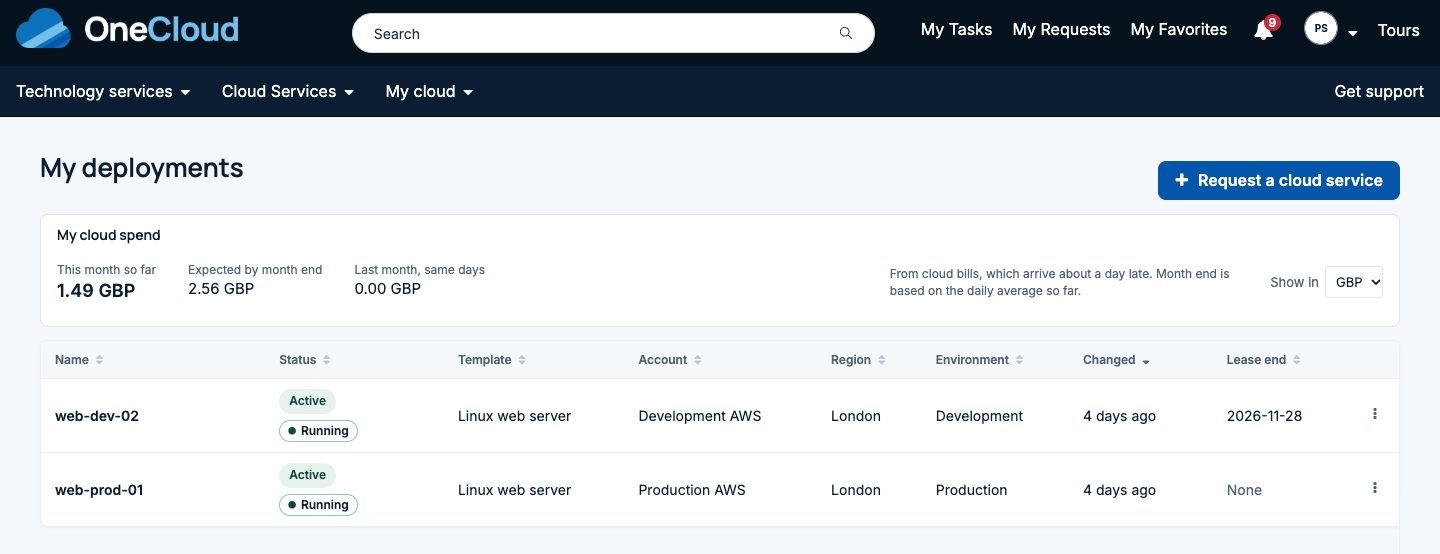
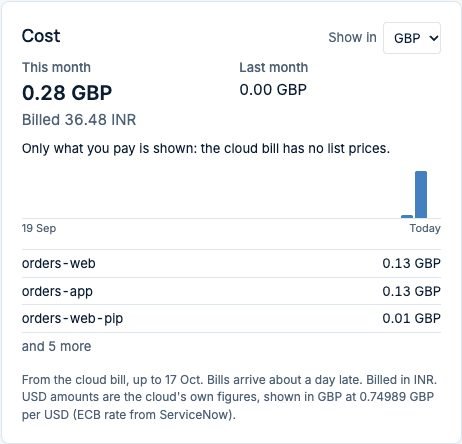
The single pane of glass: My cloud showing deployments active and servers running, resources, open requests and cost this month across clouds
My cloud: everything a person owns, on every cloud
Runs on
  • Amazon Web Services
  • Microsoft Azure
  • Google Cloud
  • Oracle Cloud
  • VMware vSphere
  • AKS, EKS, GKE and OKE
  • Amazon ECS and Azure Container Instances
Built on ServiceNow
  • Service Catalog
  • Employee Center
  • Flow Designer
  • Change
  • CMDB and IRE
  • Discovery
  • MID Server
Single pane of glass

One place to see and manage every cloud

Most companies now run more than one cloud, and each one comes with its own console, its own request route and its own idea of who's allowed to do what. Nobody has one view of what's running, who asked for it, what state it's in or what it costs.

OneCloudify gives you that view in ServiceNow. Every deployment, resource, request and cost across all your clouds and accounts sits in one place, filtered by cloud, account, region, environment, owner group or customer. Requesters see it in their own language, because OneCloudify uses the platform's translation tables. It's built on the ServiceNow platform, uses it as it is and ships its own catalog category, topics and records instead of touching yours. All your data stays in your own instance.

RequestersMy cloud shows what they own, what it costs this month, what's waiting for them and what needs attention.
OperatorsThe OneCloudify Workspace shows every run, deployment, template and policy, with retry, cancel, override and drift checks.
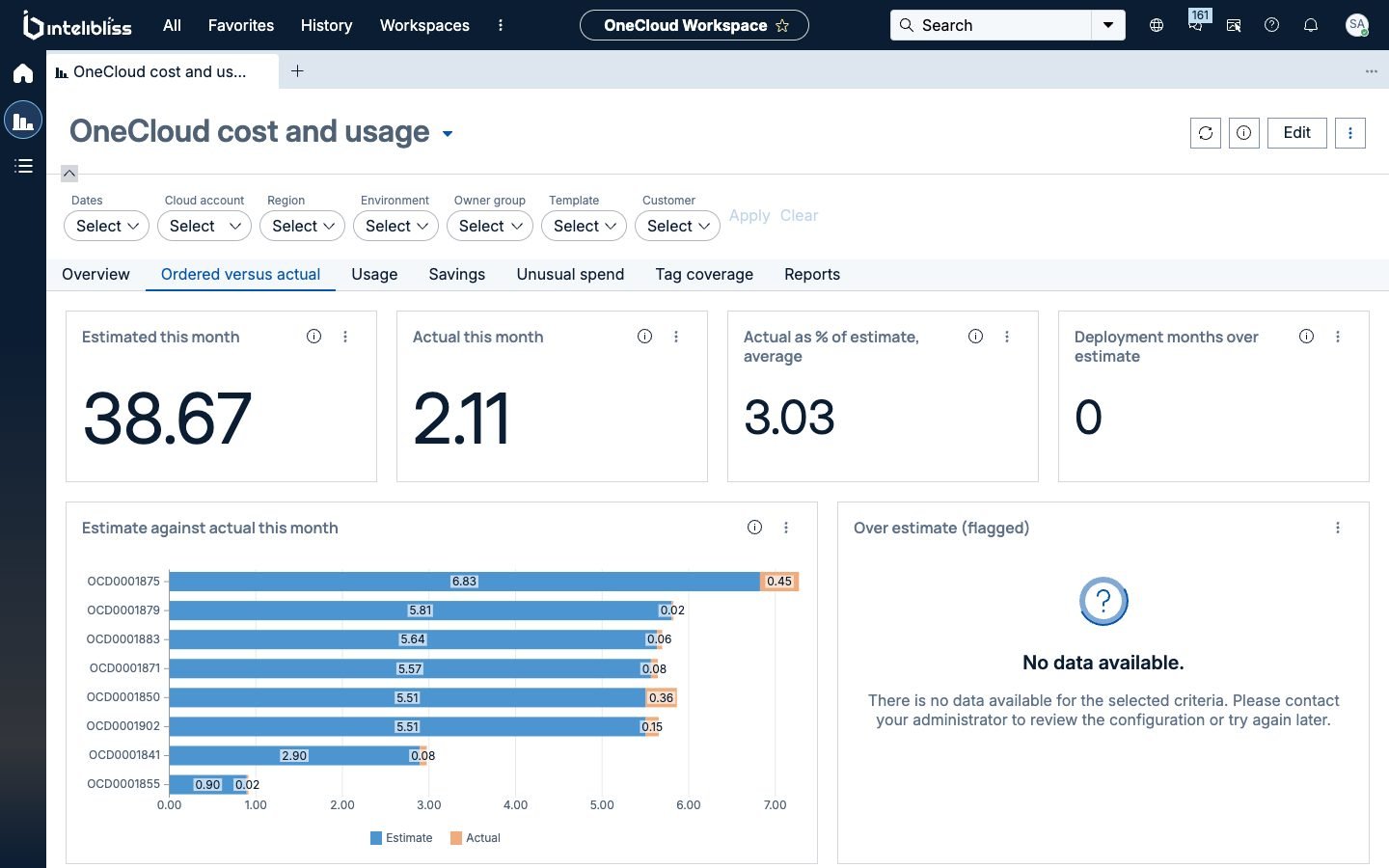
FinanceCost and usage puts the estimate made at order time next to what was actually spent, by cloud, account and team.
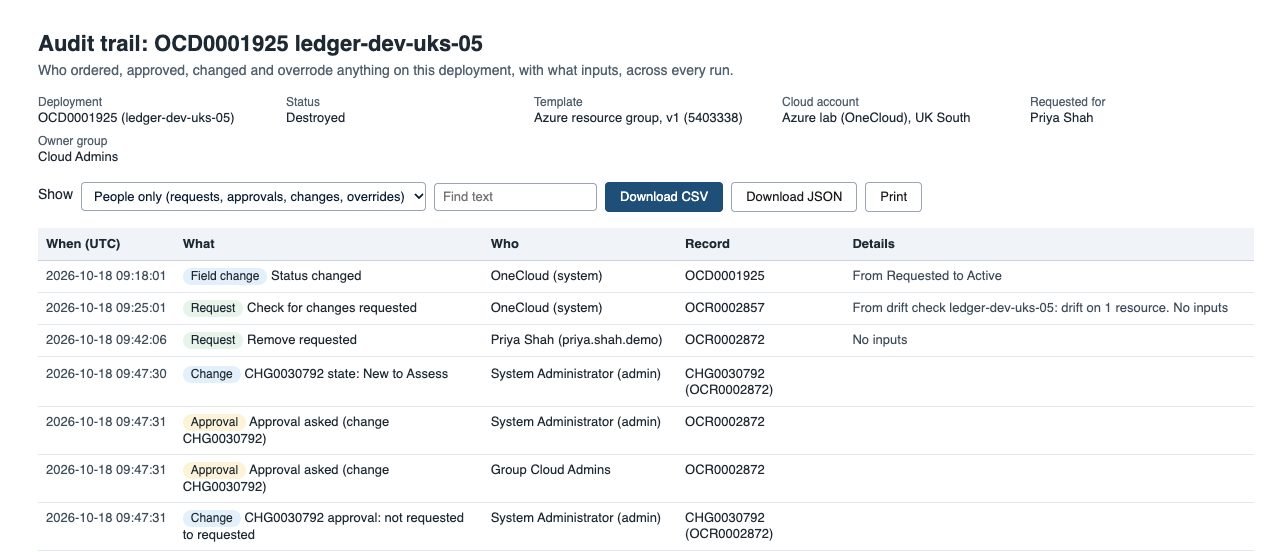
AuditorsOne trail per deployment: who asked, who approved, which change covered it and what was done.
Day 1 and day 2, for requesters

Build it, run it and change it, all under policy

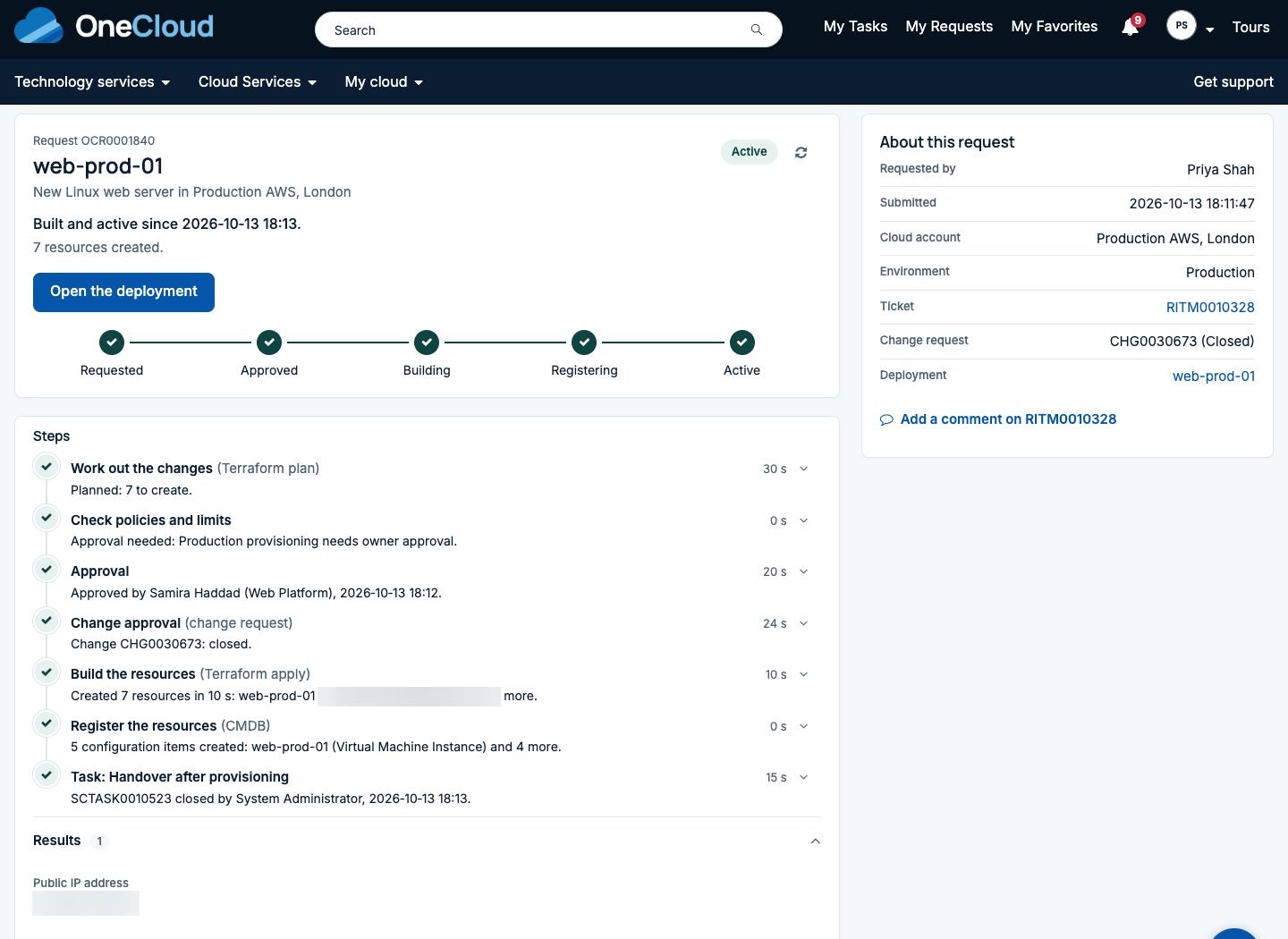
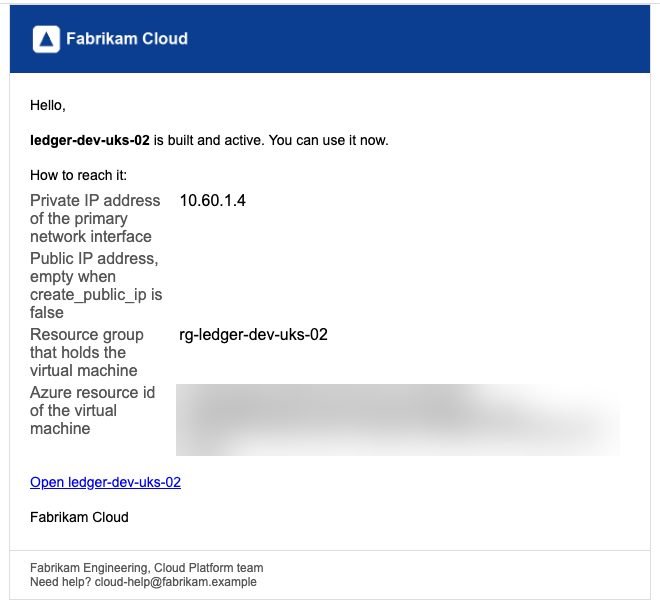
People order from the portal they already use, such as Employee Center. They pick a cloud account, a size and an owner group on a short form, with their own networks in pick lists and the monthly price in view. OneCloudify works out exactly what will be built, checks it, asks for approval and a change where your rules say so, builds it, records it in the CMDB and tells them it's ready.

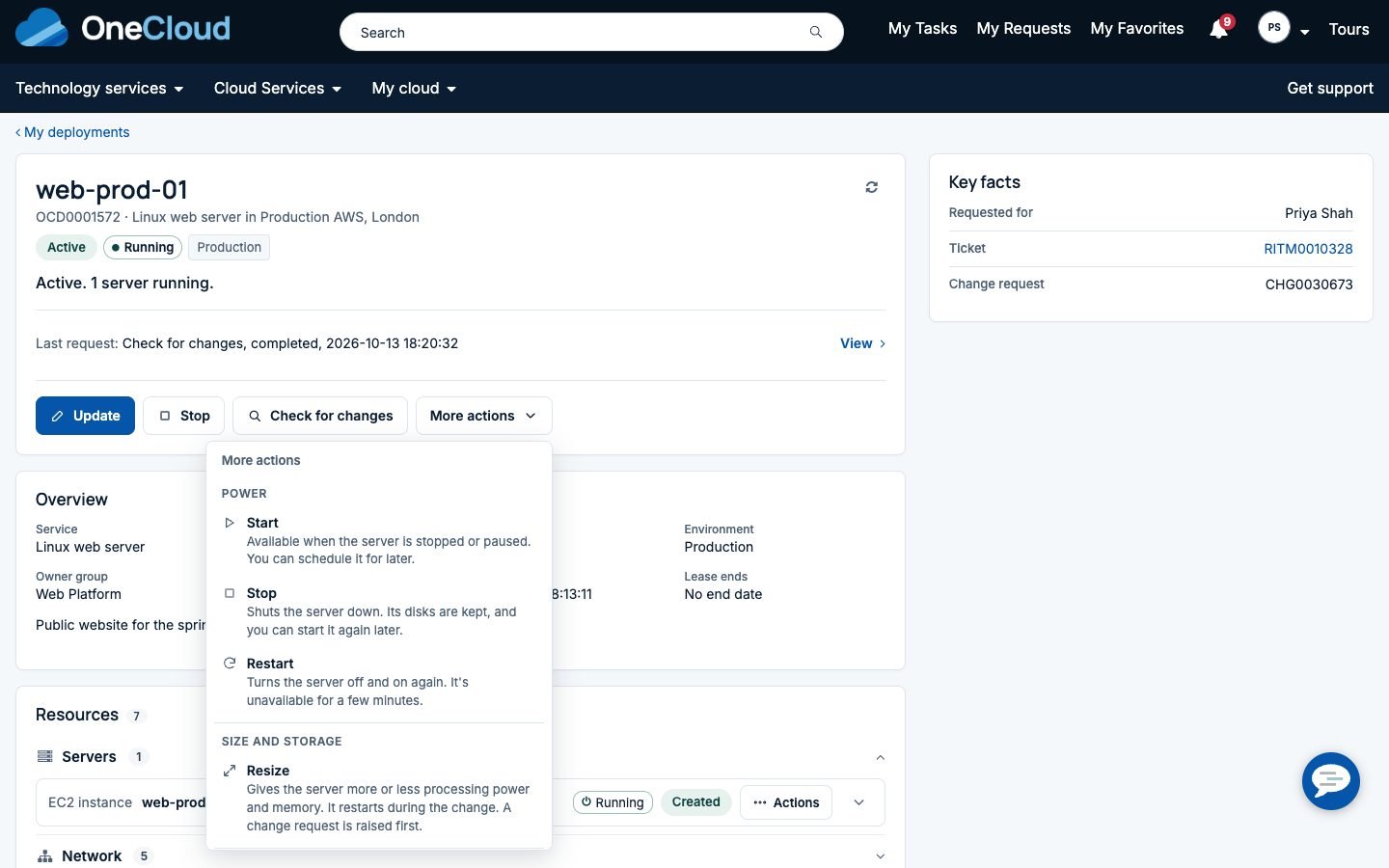
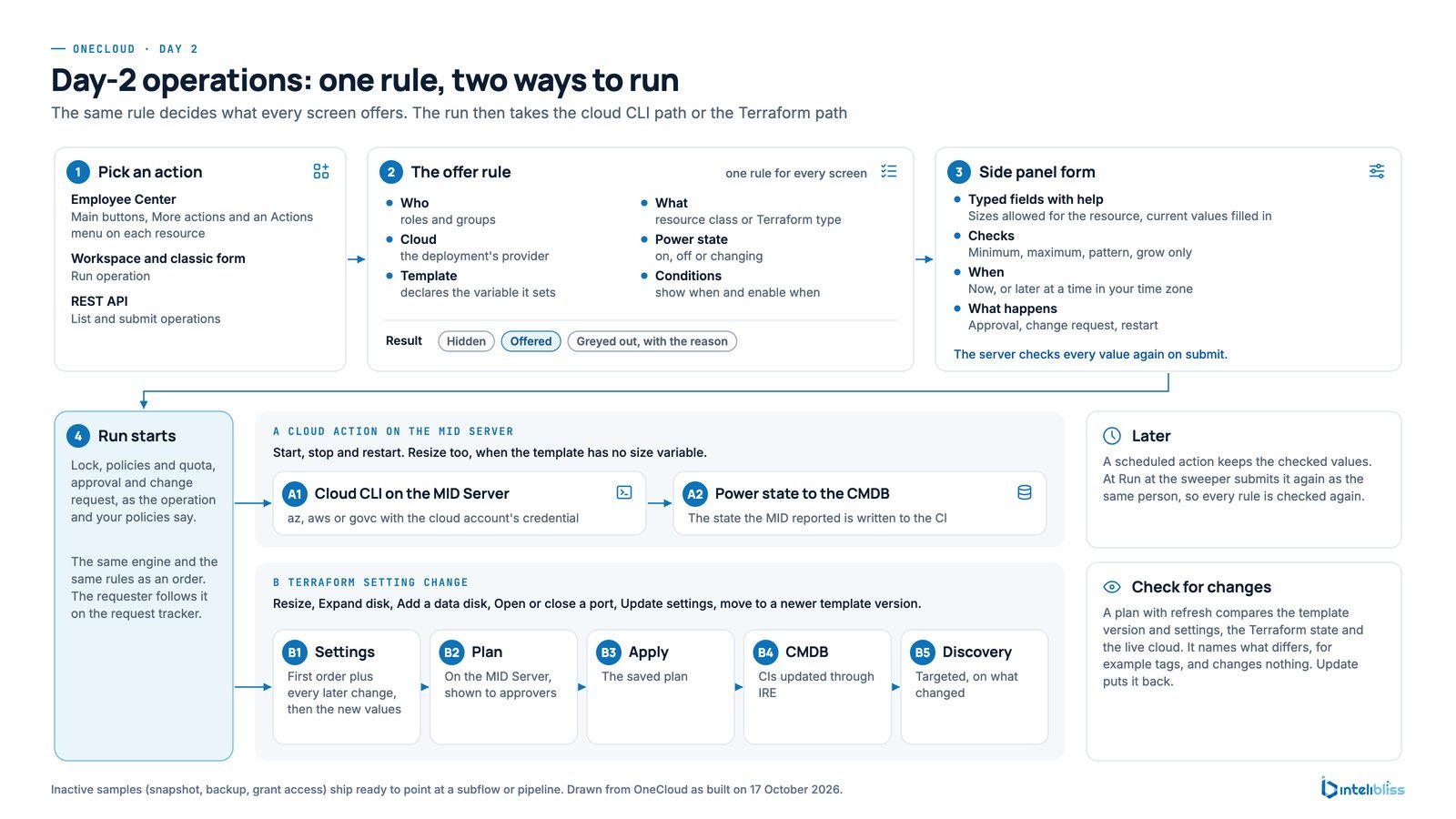
Afterwards each deployment offers the actions that fit it, per server or for the whole deployment, now or at a time they pick. Operators get the same actions in the workspace, and integrations get them through the REST API.

Each action runs the way your team already works. Power actions call the cloud's own CLI, Azure DevOps Pipelines is built in, and Ansible, GitHub Actions, GitLab CI or your own automation plug in as a day-2 executor.

Start, stop and restartResizeExpand a diskAdd a data diskOpen or close a portBusiness hours schedulesRun now or laterSet or extend a leaseUpdate settingsUpdate to a newer versionCheck for changesRemoveScale a node poolUpgrade KubernetesFix tags
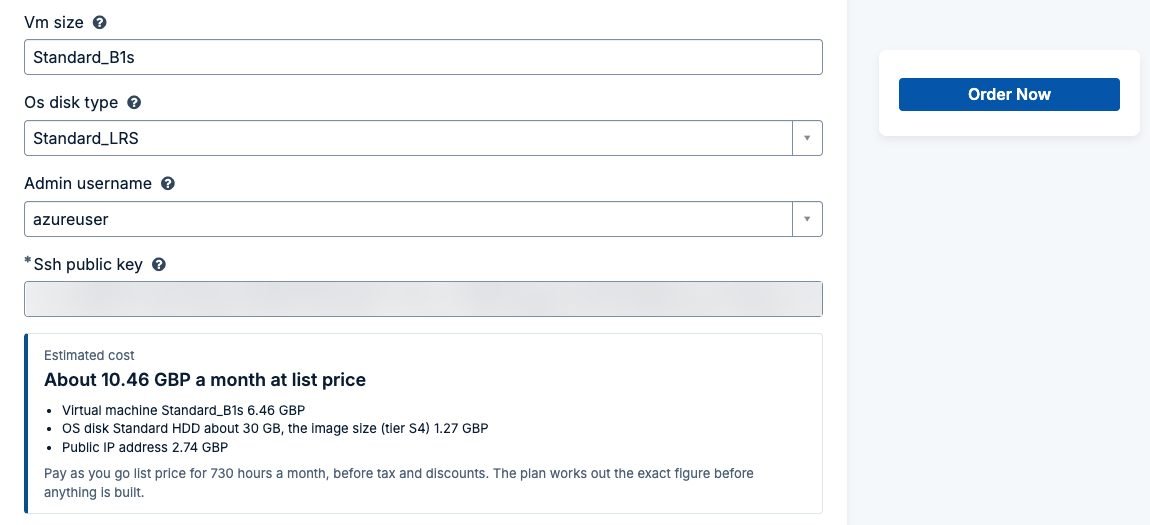
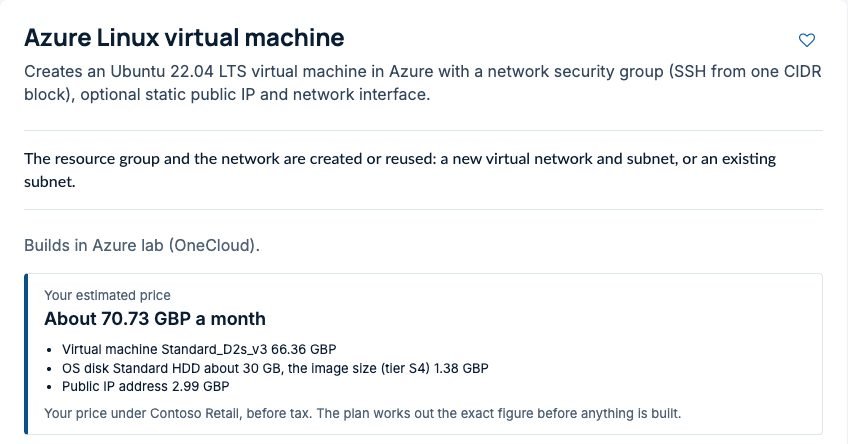
  • The Azure three tier order form in Employee Center with the estimated cost of about 37.70 GBP a month at list price, split into the virtual machine, its OS disk, the Standard load balancer, the PostgreSQL server and its storage, and the public IP address, next to Order Now

01Order: the monthly price of every part, before anyone orders

How it works

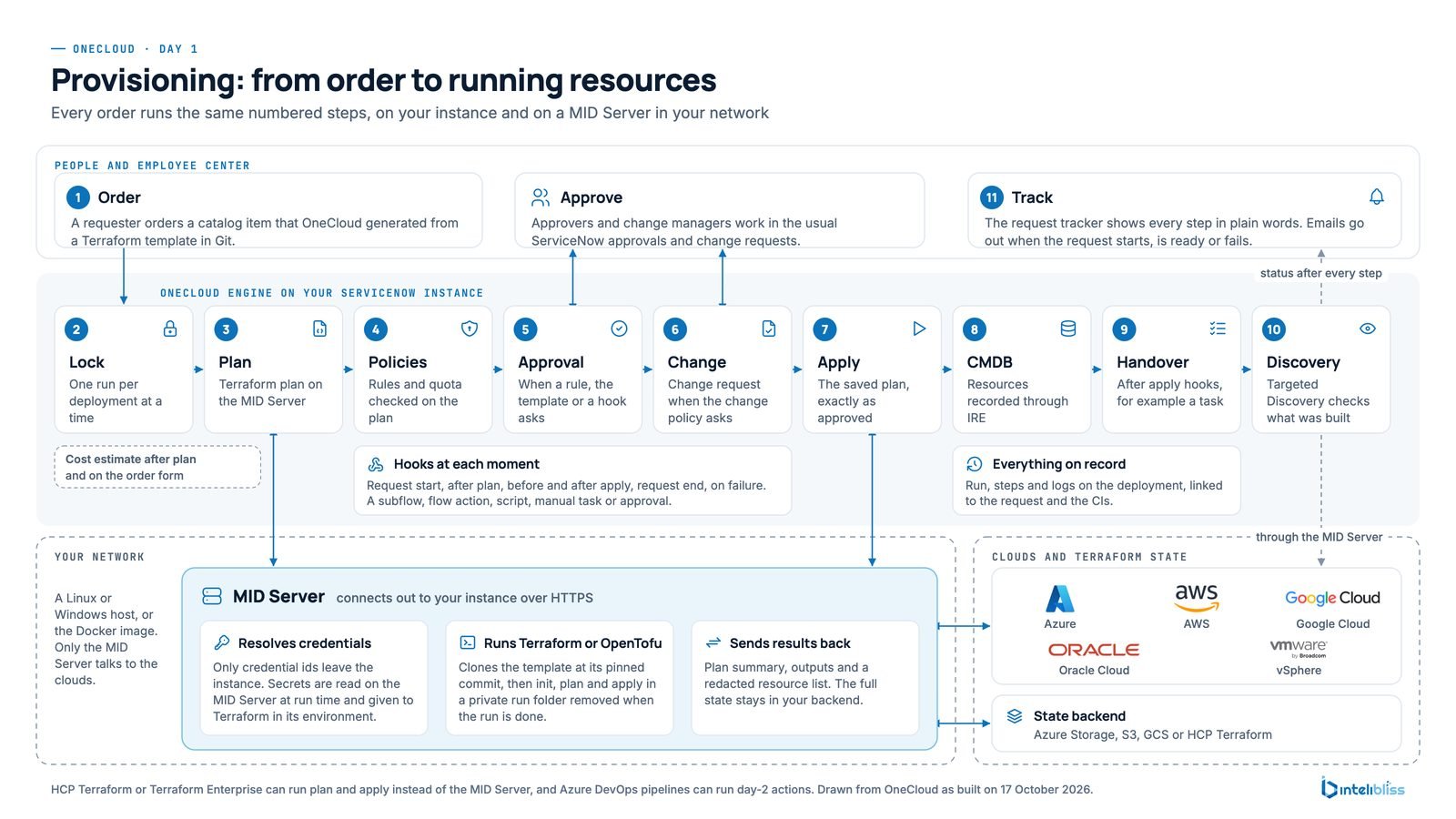
The same steps for every order and every change

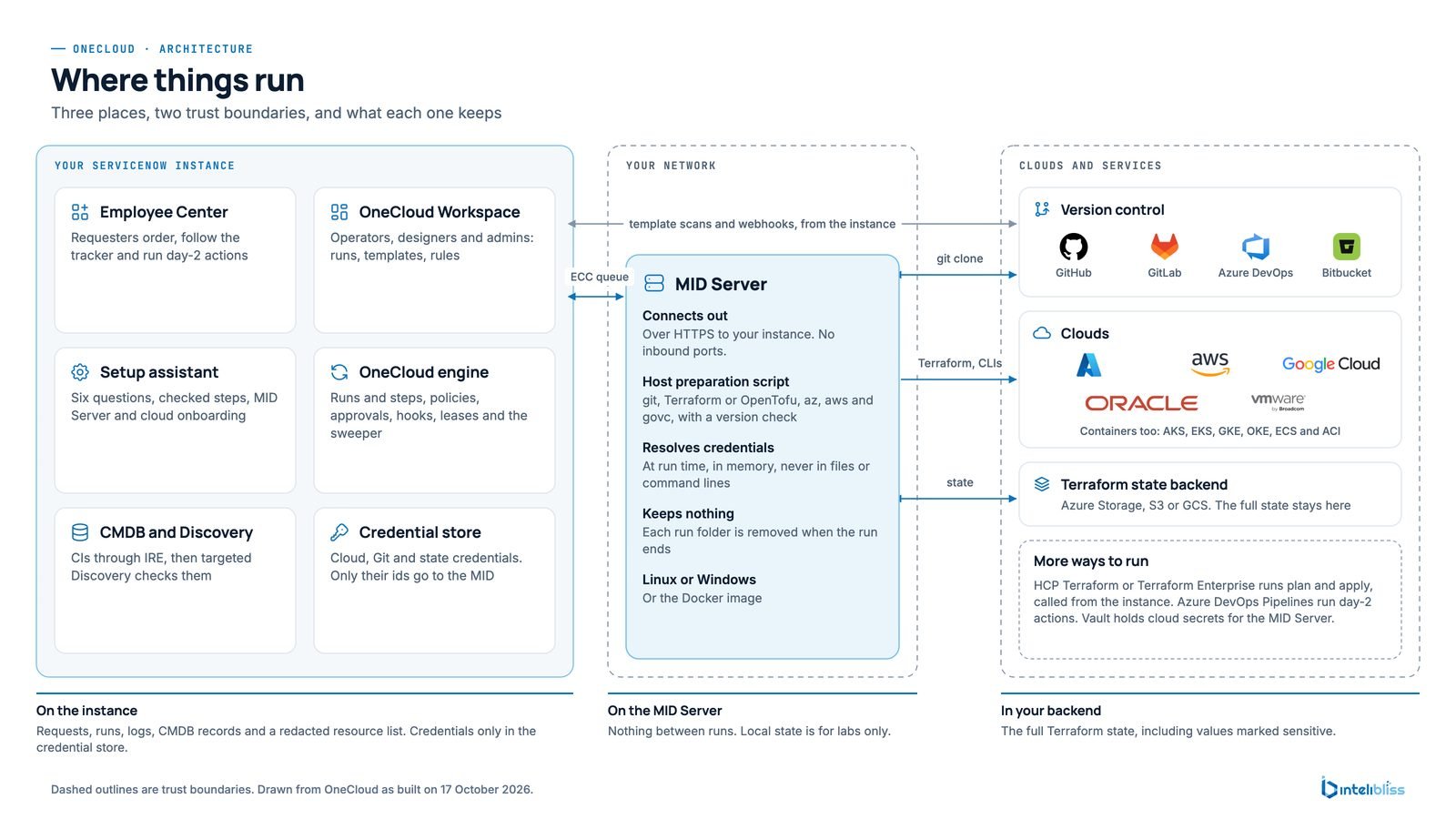
ServiceNow keeps the request, the approval, the change and the record, and all your data stays in your own instance. The build runs with whichever Terraform edition you use: Terraform Community Edition, HCP Terraform or Terraform Enterprise.

OneCloudify day 1 flow: a requester orders in Employee Center, OneCloudify on the ServiceNow instance runs lock, plan, policies, approval, change, apply, CMDB, handover and discovery, and the runners band shows where plan and apply can run, Terraform Community Edition (or OpenTofu), HCP Terraform (formerly Terraform Cloud) or Terraform Enterprise, with the MID Server as the secure path out to Azure, AWS, Google Cloud, Oracle Cloud, vSphere and the state backend
Every order runs the same steps, on every cloud
Governance, for operators

Fast for the right request, firm for the wrong one

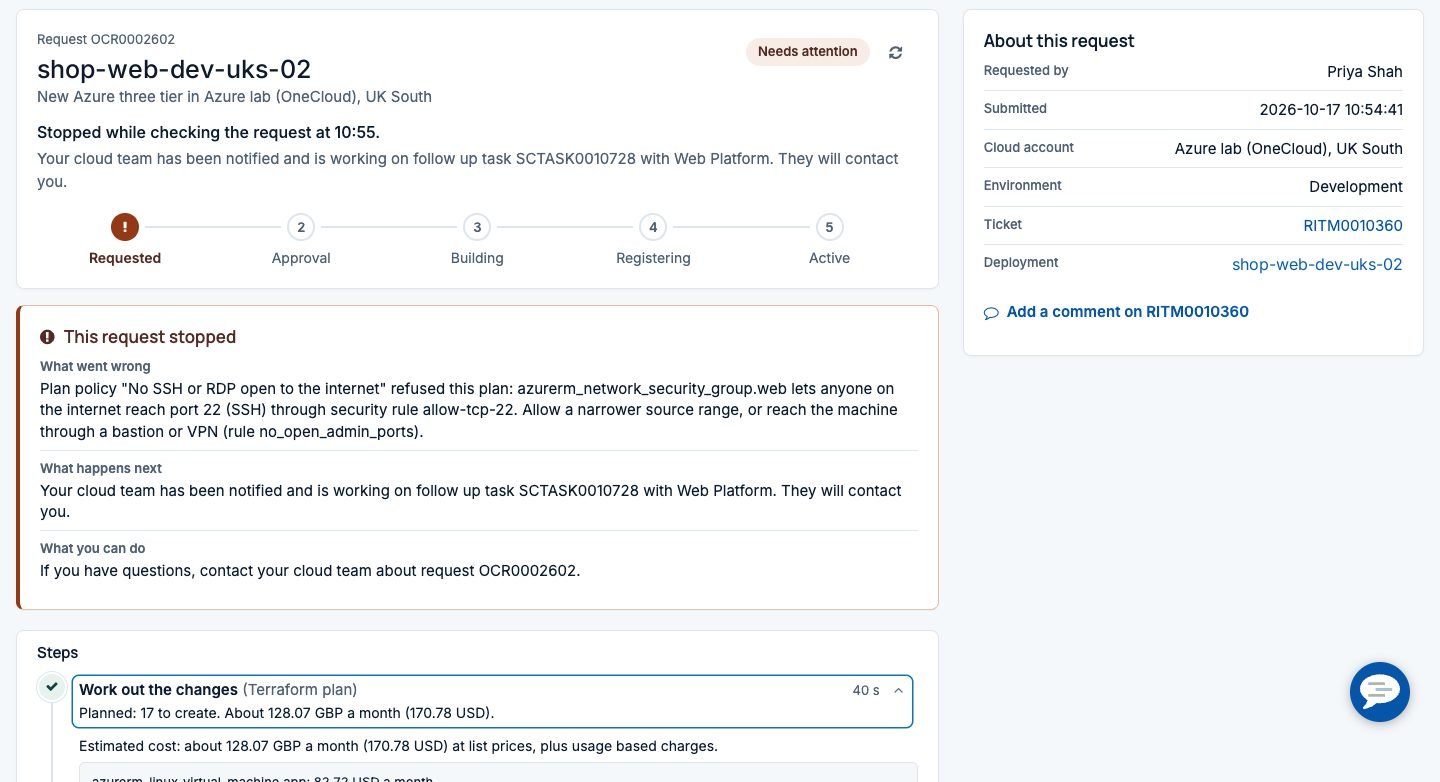
Rules run before anyone is asked to approve, so a compliant development server goes straight through and a risky change stops with a reason. How OneCloudify governs without slowing people down.

  • Policy as code. Rego policies in Open Policy Agent deny, warn, or hold for an administrator override with a reason. If a policy can't be checked, the run doesn't go ahead.
  • Approvals and Change. Your normal ServiceNow approvals and change requests, with the price and any policy findings in front of the approver.
  • Price limits and separation of duties. An order above a monthly price waits for approval, and nobody approves their own request.
  • Readiness and waits. Orders only go through when everything they need is ready: the account, the runner, the template and the people. No request waits on a group nobody works, because a group with no active members can't be given work. Waits are visible, with reminders and escalation, and the request tracker says who it's waiting on.
  • Quotas, leases, tags and drift. Quotas per group or account, leases with reminders, required tags with a Fix tags action, and a nightly drift check that tells the owner group what changed outside OneCloudify.
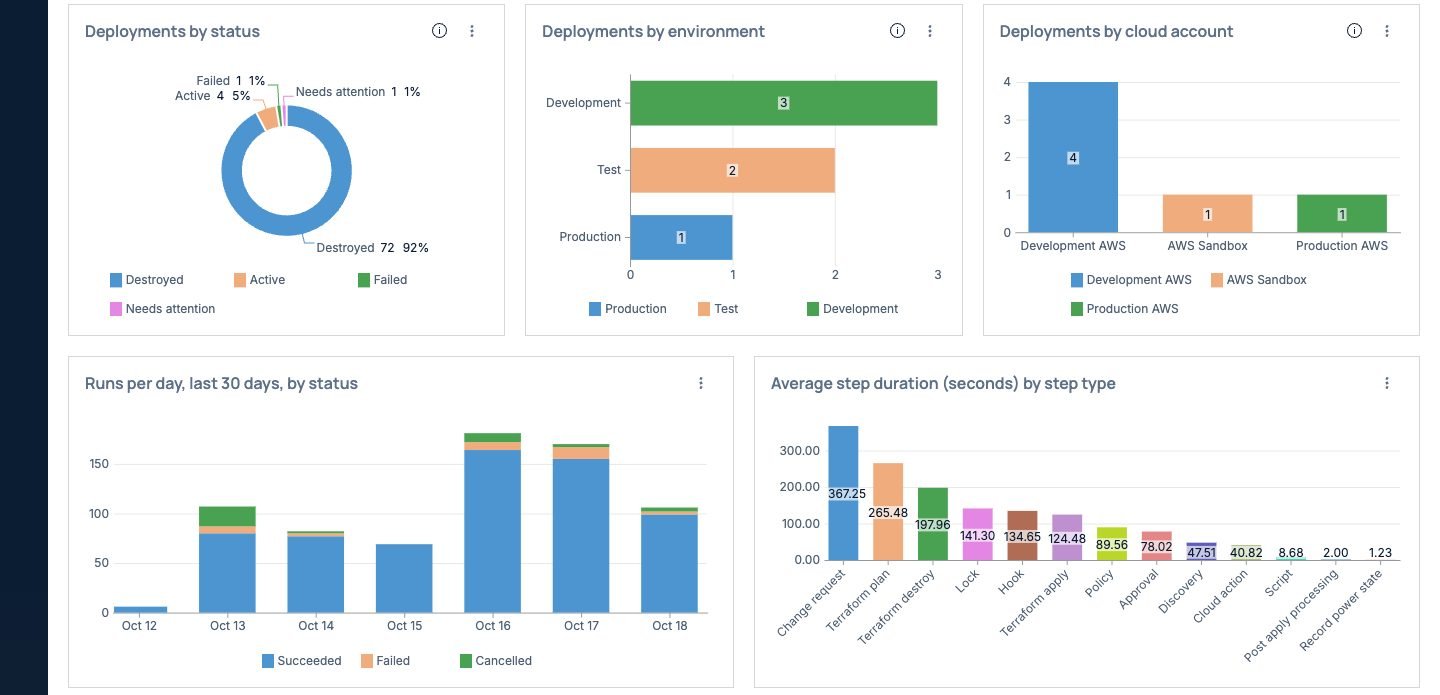
  • OneCloudify Workspace overview charts across every cloud: deployments by status, by environment and by cloud account, runs per day by status and average step duration by step type

01The whole estate across clouds and accounts

Pricing and cost, for finance

People see the price before they order

Before. OneCloudify keeps a price book of the clouds' published list prices, loaded in the background for the regions you use, so the order form never waits on a cloud API. The estimate shows one line per resource, including the charges that are easy to miss, such as public IP addresses, operating system disks and cluster fees. Before approval the exact resources are priced again, and approvers see that figure.

After. Once a deployment runs, OneCloudify reads its cost from the cloud's own cost data, matched by the tag it puts on every resource. Each deployment gets a cost card, each requester sees their spend in My cloud, and everyone sees amounts in their own currency.

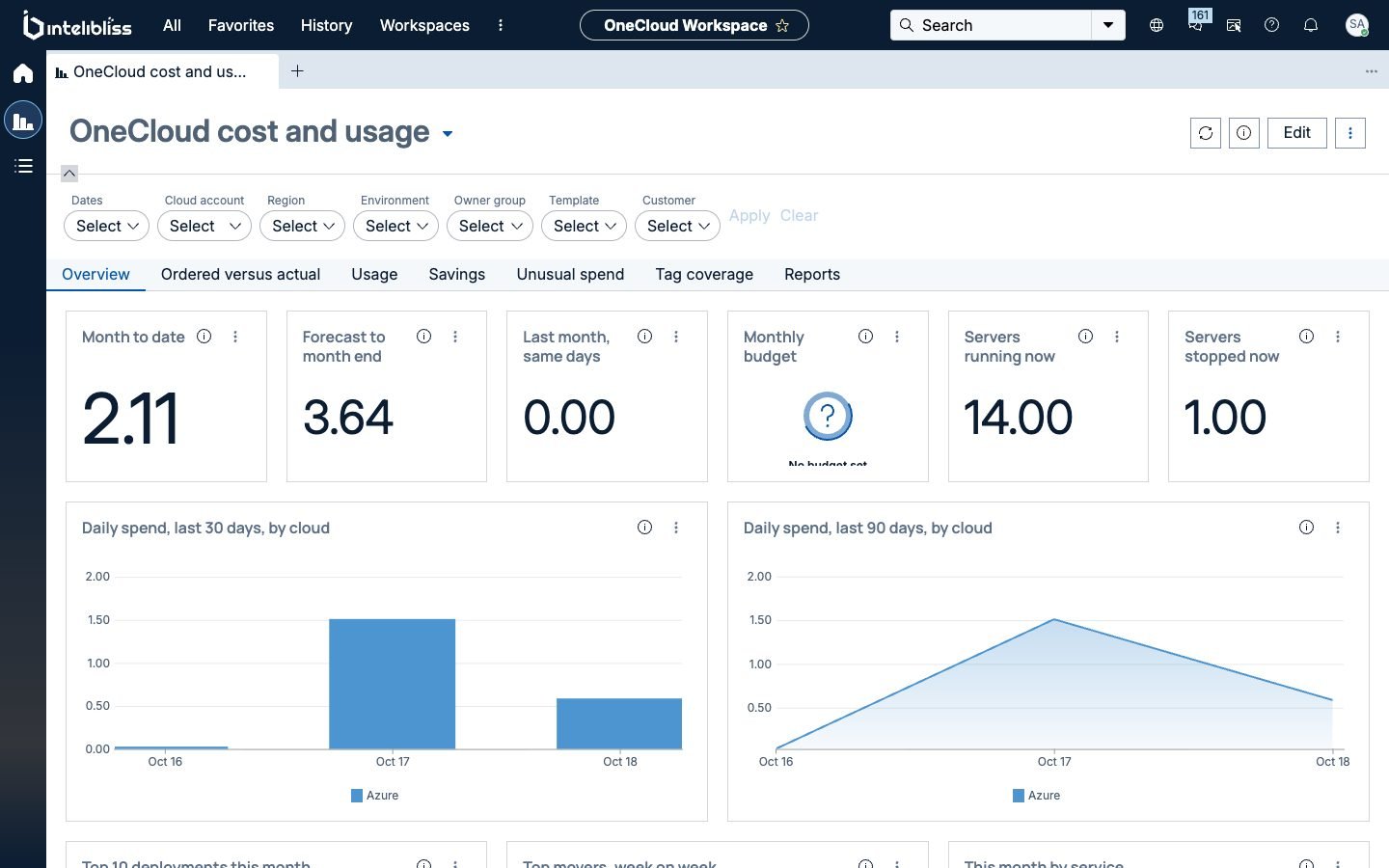
Ordered versus actual. Cost and usage shows month to date and forecast, spend by cloud, the estimate next to what was spent, hours saved by schedules, saving opportunities, unusual spend and tag coverage. How cost works.

  • OneCloudify cost and usage overview in the workspace: month to date, forecast to month end, last month, monthly budget, servers running and stopped, and daily spend by cloud over 30 and 90 days, with filters for dates, cloud account, region, environment, owner group, template and customer

01Cost and usage: month to date, forecast and spend by cloud

MSP ready

Many customers, one instance, each with its own price and brand

Works with or without domain separation. Single company customers never see any of it. OneCloudify for MSPs.

Customers kept apartOwn cloud accounts, connections and state. Each customer's people see only their own deployments, costs and audit trail.
Price plansMarkups, discounts, fees, exchange rates and contracted prices, shown on the order form and the approval.
Rated and reconciledThe month rated from the real cloud bill, reconciled against what the clouds charged and exported to your invoicing system.
Your customer's brandEmails with each customer's logo, colours and sign-off, and a Teams or Slack channel per customer.

See it on your own clouds. A short demo with your accounts, your approval rules and your CMDB.

Request a demo
On record, from build to removal

Nothing built that ServiceNow doesn't know about

CMDB and Discovery

All your data stays in your own ServiceNow instance, and every resource is recorded in the CMDB the right way: through the Identification and Reconciliation Engine, in the right CI class, related to its region and under reconciliation rules that respect what other sources own. Where you run ITOM Discovery, a targeted discovery confirms it straight after the build. On removal every configuration item is retired, so nothing is left behind.

Full audit trail

One trail per deployment or run: who ordered it with which inputs, which policies passed or were overridden, who approved, which change covered it and what was done in the cloud. Print it or export CSV or JSON. Secret values never appear in it.

Catalog items created for you

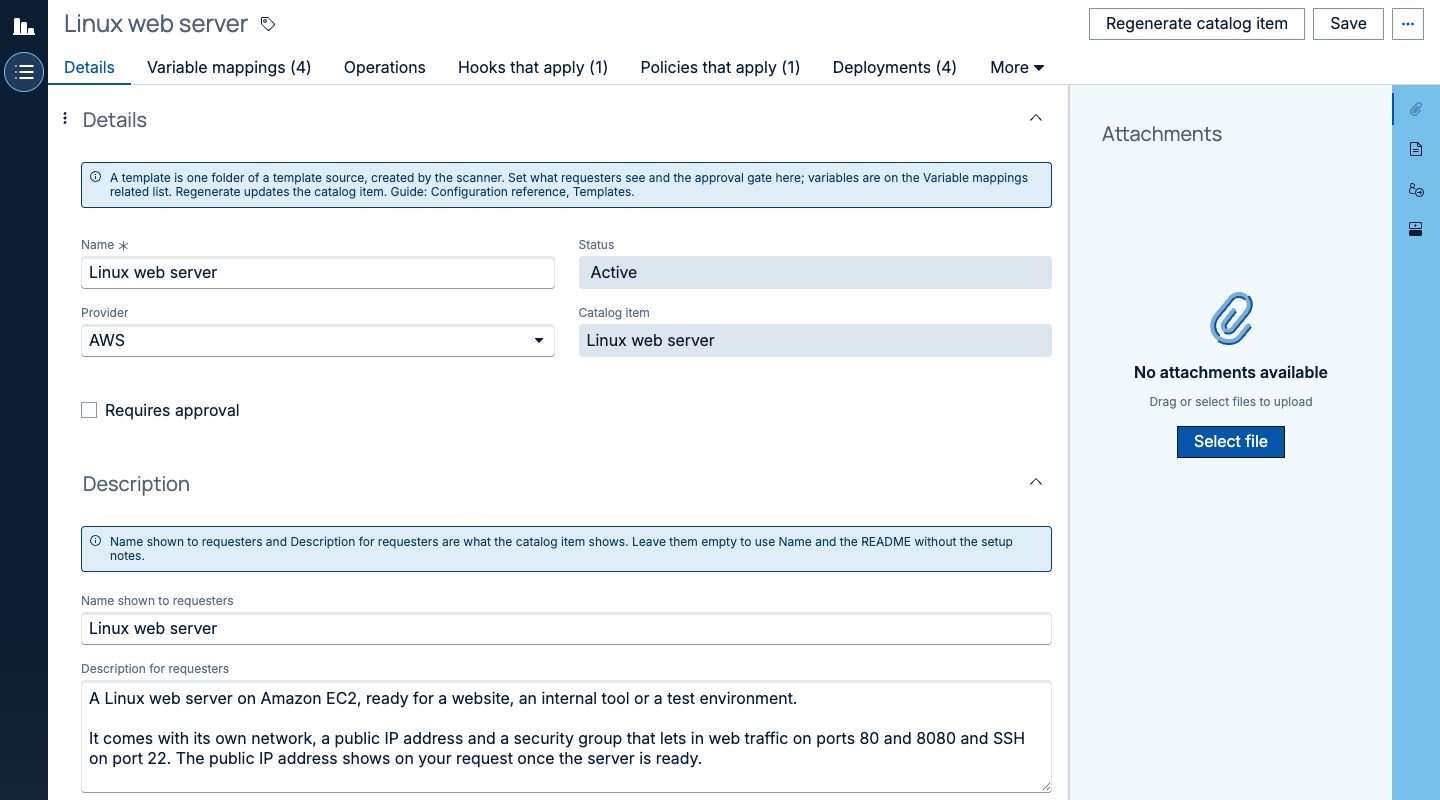
Point OneCloudify at a folder in GitHub, GitLab, Azure DevOps or Bitbucket and it creates a catalog item per template, with questions, sections and pick lists. It looks after the state, and a template change becomes a pull request your team reviews. How it works.

The engine underneath

Terraform, the way you already run it

OneCloudify supports every Terraform edition, so your infrastructure code stays the source of truth whichever one you run.

Terraform Community EditionThe open source Terraform CLI, or OpenTofu, on a Linux or Windows MID Server or a Linux host over SSH.
HCP Terraform and Terraform EnterpriseHCP Terraform (formerly Terraform Cloud) or your own Terraform Enterprise runs the plans and applies, in VCS driven or API driven workspaces.
Finds the Terraform you already runTerraform discovery reads your Git repositories, the folders on your runner hosts and your HCP Terraform and Terraform Enterprise workspaces, then lets you adopt what it finds as deployments people can see and change.
Dynamic credentialsWith HCP Terraform, AWS and Azure trust the workspace directly, so no long lived cloud key is stored anywhere. A variable set is there as the second option.
Complex templates welcomeNested object and list types, tfvars files, JSON syntax, sensitive and ephemeral inputs: the order form follows the variables your template declares, and checks the answers before anyone submits.
Google Cloud from one scriptOne bootstrap run in Cloud Shell prepares the project, then you paste its result into the setup assistant, test the connection and discover the project.
Day-2 automation you already runAzure DevOps Pipelines is built in, with the server's IP and name passed in and a result file OneCloudify polls. Ansible, GitHub Actions, GitLab CI or your own automation plug in as a day-2 executor, and OneCloudify keeps the request, approval and record.
Credentials stay in your networkIn the platform's credential store or HashiCorp Vault, read on the MID Server for one run, never written to logs or tables.
Many accountsMore AWS accounts, Azure subscriptions, Google Cloud projects or Oracle Cloud compartments, each with its own credential, state and nightly health check.
Hybrid by designThe MID Server sits next to the rest of your estate, so cloud and on-premises work go through the same front door.

Easy to install

A guided setup from install to a first order

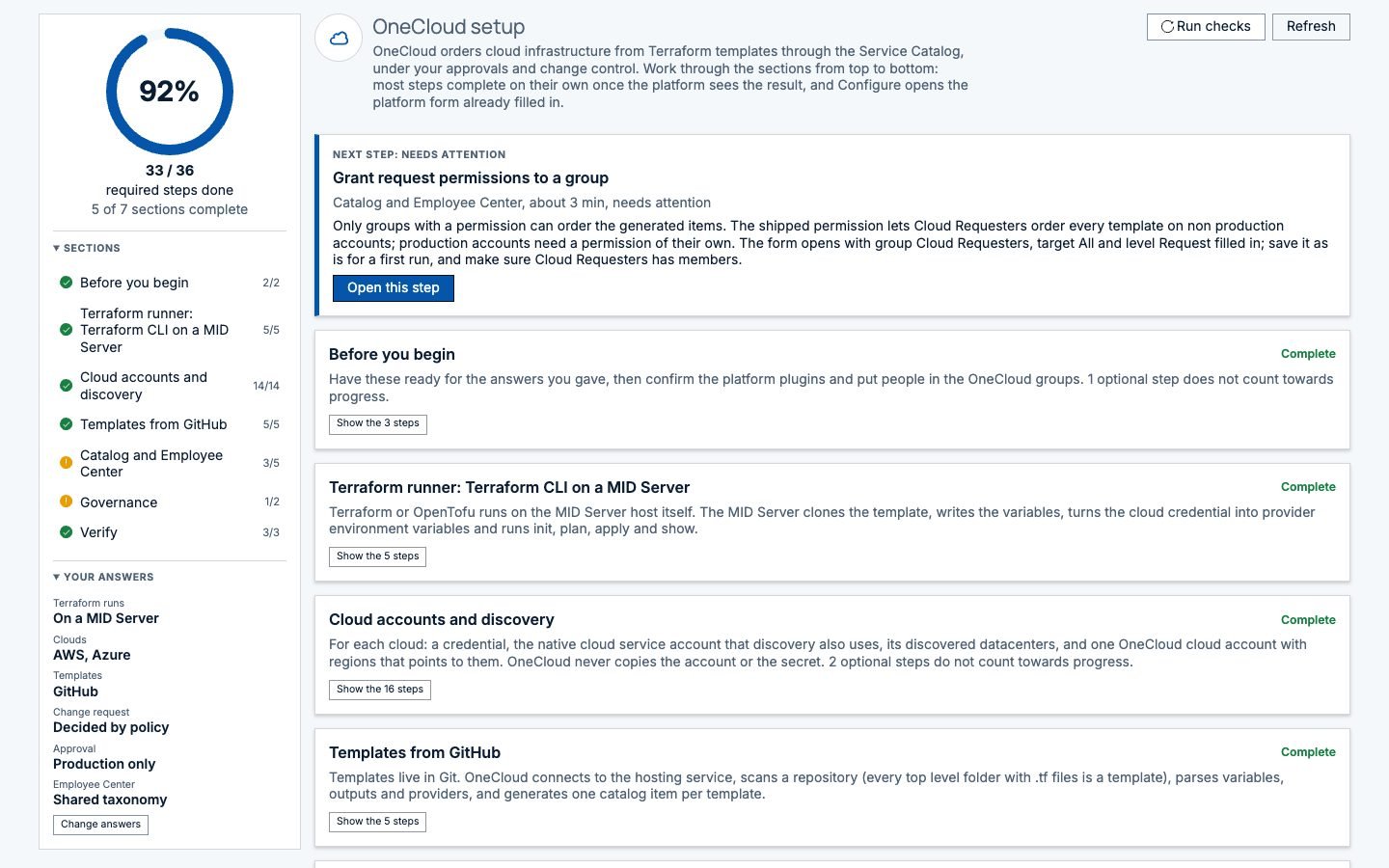
The setup assistant opens each form already filled in and ticks steps off when it sees them done. Where a step used to mean several records, it's now one click or one pasted token. Manual steps are kept to the ones the platform or your network needs.

Answer six questionsWhere it runs, which clouds, where templates live, how change and approval should work.
Prepare the MID ServerInstall a standard MID Server, download the host preparation script from the assistant with its SHA-256 and run it once. The host check then confirms the tools, Python 3 and the price and cost addresses.
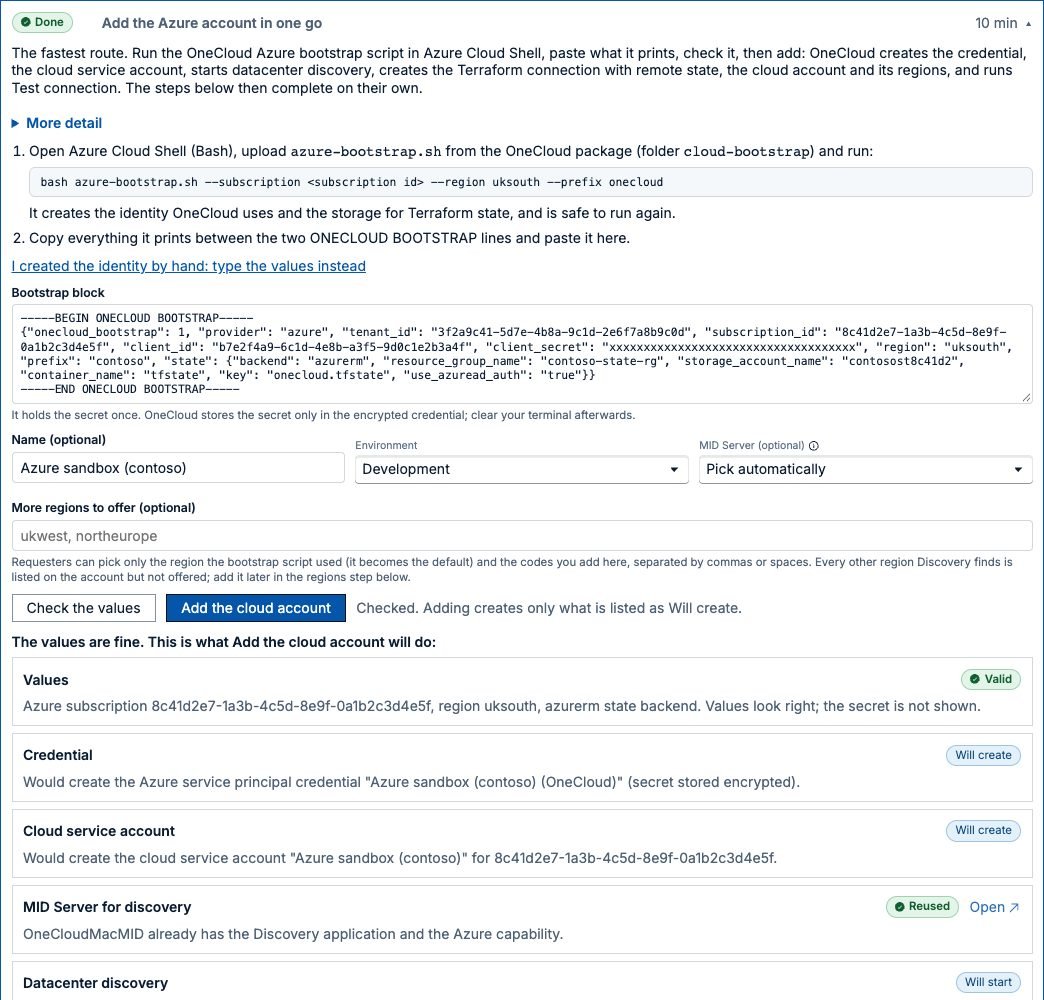
Add a cloud accountDownload the bootstrap script, run it in the cloud's shell and paste what it prints. OneCloudify creates and tests the rest, Terraform connection included. No cloud yet? Create a lab account in one click.
Connect your templatesPaste a token for GitHub, GitLab, Azure DevOps or Bitbucket. OneCloudify stores it encrypted, creates the connection, tests it, and the first scan generates the catalog items. Or click Add the OneCloudify samples.
Order the first itemOrder one and watch it build. Standard changes use the platform's Standard change model by default, so they run and close on their own.
Turn on costTurn on actual cost in one click, with a cost access test per account. Currency follows your instance, and CPG and migration menus only show when you use them.
The Add the AWS account in one go step: Download buttons for the bootstrap script and its CloudFormation template with their SHA-256 checksums, the command to run in AWS CloudShell, a box to paste what it prints, and Check the values and Add the cloud account
Adding a cloud account in one go: download, run, paste
Migration from CPG and Cloud Services Catalog

A supported way forward, on the same platform

ServiceNow is preparing Cloud Provisioning and Governance and Cloud Services Catalog for deprecation. OneCloudify keeps everything in ServiceNow: the same catalog, approvals and Change, the same CMDB, and your templates as they are. It has no runtime dependency on either product.

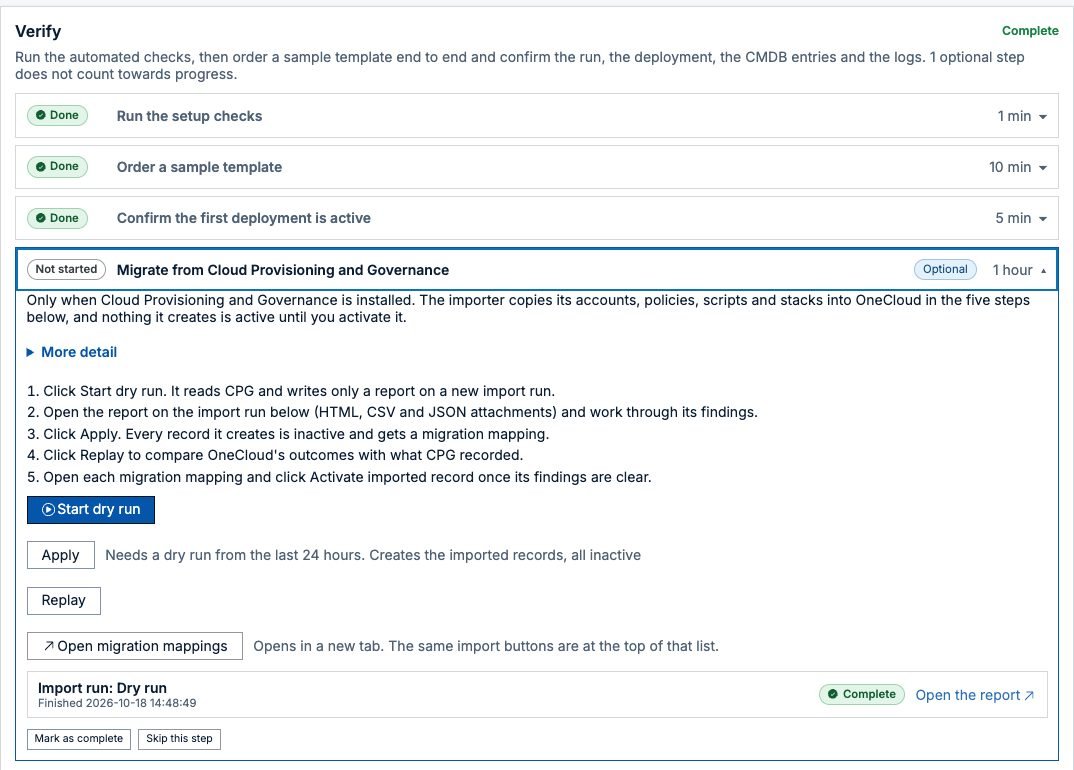
The importer starts with a dry run that only writes a report. You then bring across everything or one part at a time, all switched off until you turn it on. Replay runs past CPG decisions through the imported policies, running stacks are adopted with their state, and CPG keeps running until the last one has moved. Read how the move works, or see our CPG and CSC replacement service.

The Migrate from Cloud Provisioning and Governance step in the OneCloudify setup assistant: a button to download the migration assessment, then numbered steps to start a dry run, apply with every record switched off, replay past CPG decisions and switch items on wave by wave, with a finished run listed below
The CPG import: assessment download, dry run, apply, replay
FAQ

Questions we get asked

What is OneCloudify?

OneCloudify is a hybrid cloud provisioning and governance solution built on the ServiceNow platform. It gives you one place to order, track and manage cloud services across every major cloud, AWS, Azure, Google Cloud and Oracle Cloud, plus VMware vSphere for private cloud, with requesters working in the Employee Center they already use. Every order and every change after it runs under the approvals, change requests and policies you already use in ServiceNow, the cost is shown before and after, and every resource is recorded in the CMDB. It's easy to extend, so new clouds, resource types and automation plug in without changing the core.

Which clouds does it support?

AWS, Microsoft Azure, Google Cloud and Oracle Cloud at the same level, with the same features on each, plus VMware vSphere for private cloud. Containers are covered too: AKS, EKS, GKE, OKE, Amazon ECS and Azure Container Instances, with actions that fit them, such as scaling a node pool or upgrading Kubernetes.

Can we extend it ourselves?

Yes, and that's how it's built. Cloud providers, resource types, day-2 executors, step types, runners, credential sources, state backends, cost and price sources, policy checks and setup checks are all extension points. An extension is a script include in your own scope registered on a platform extension point, or a configuration row, so it survives upgrades and never means editing OneCloudify itself. The setup assistant lists what's registered.

What can people do after something is built?

Start, stop and restart servers, resize them, add or expand disks, open or close ports, set business hours schedules, extend a lease, update to a newer version of the template and remove the deployment. Each action follows the approval and change rules the process owner sets. Power actions call each cloud's own CLI. You can add your own actions as a Flow Designer subflow or an Azure DevOps pipeline, which is built in, and Ansible, GitHub Actions, GitLab CI or your own automation plug in as a day-2 executor. Actions get the server's IP address, CI name, Terraform outputs and other record values straight from the records, so requesters type only what's really a choice. Start and stop can also run through your own pipeline with one setting on the cloud account. After any of these actions OneCloudify reads the servers it touched from the cloud, updates their CIs and says on the request page what changed.

How do people see what something will cost?

The order form shows a monthly estimate at list prices as the requester picks a size, from a price book OneCloudify keeps up to date in the background, so ordering never waits on a cloud API. The plan is priced again before approval. Once a deployment runs, OneCloudify reads its actual cost from the cloud's own cost data and shows it on the deployment, in My cloud and in the Cost and usage dashboards, in each person's own currency.

Can we enforce our own rules before anything is built?

Yes. Policies written in Rego run in Open Policy Agent before anyone is asked to approve. A rule can stop the request, warn, or stop it until an administrator overrides it with a reason that is kept on the record. Price limits hold an order above a monthly amount for approval, and nobody can approve their own request.

We are a managed service provider. Does it work for us?

Yes. Each customer gets its own cloud accounts, catalogue and view, with or without domain separation. Price plans, contracted prices and price limits put the customer's price on the order form and the approval, the month is rated against the real cloud bill and reconciled, and the result exports to your invoicing system. Emails, Teams and Slack messages are branded per customer. Single company customers never see any of this.

Does it need ITOM Discovery?

It works with or without it. All your data stays in your own ServiceNow instance, and every resource OneCloudify builds is recorded in the CMDB the way CMDB best practice expects: through the Identification and Reconciliation Engine, in the right CI class, under reconciliation rules that respect the attributes other sources own. Where you run Discovery, OneCloudify starts a targeted discovery after each build and after each day-2 action, so the resources are confirmed by the platform as well.

What runs underneath?

OneCloudify's own engine on your ServiceNow instance runs every order and every change, step by step. For the build it works with the Terraform you already run: Terraform Community Edition (the open source CLI), HCP Terraform (formerly Terraform Cloud), Terraform Enterprise or OpenTofu. Runs happen on a MID Server (Linux or Windows), on a Linux host over SSH, or in your own HCP Terraform or Terraform Enterprise. Day-2 actions call each cloud's own CLI, run an Azure DevOps pipeline, which reports back through a result file OneCloudify polls, or hand over to the automation you plug in. Templates come from GitHub, GitLab, Azure DevOps or Bitbucket, and OneCloudify creates the catalog items and looks after the state for you.

Can our users see it in their own language?

Yes. The portal pages, the order form with its cost estimate, the messages that say why something can't be ordered yet or what went wrong, the request tracker, emails and chat messages follow the language each person picked in ServiceNow. OneCloudify uses the platform's own translation tables, so you add a language the way you translate the rest of your instance, and anything not yet translated shows in English. A managed service provider can give each customer its own wording.

Where are our cloud credentials kept?

In the platform's own credential store, or in HashiCorp Vault. They are read on the MID Server at run time for that run only, and never written to logs, command lines or instance tables.

How long does setup take?

The setup assistant asks six questions, then shows only the steps your answers need, opens each platform form already filled in and ticks steps off when it sees them done. The host preparation script and the cloud bootstrap scripts download from the assistant with their SHA-256 checksums. To connect your Git hosting or Azure DevOps Pipelines you paste a token, and OneCloudify stores it encrypted, creates the connection and tests it. For a first order with no repository or cloud yet, one click adds the OneCloudify samples and another creates a lab account. Most of the time goes on collecting credentials.

Do changes wait for someone to move them?

Not standard ones. OneCloudify uses the platform's Standard change model by default, so a standard change is raised, run and closed on its own, with the run on record. Only a normal change waits for its approvals and Implement, the way your change process already works.

Which ServiceNow releases are supported?

We actively support the current ServiceNow family release and the two before it. The Store listing and the release notes name the families for each OneCloudify release.

Does OneCloudify depend on Cloud Provisioning and Governance or Cloud Services Catalog?

No. OneCloudify is built on core ServiceNow platform capabilities: Employee Center and the Service Catalog, Flow Designer, the MID Server, the CMDB and IRE, and Change. It doesn't call CPG, Cloud Services Catalog or the Cloud API at run time. For customers who run CPG today, OneCloudify includes an importer that brings accounts, policies, scripts, templates and running stacks across.

Talk to us

See every cloud in one place, in your ServiceNow

A short demo on your own instance setup: your clouds, your approval rules and your CMDB. Or write to us at info@intelibliss.com.